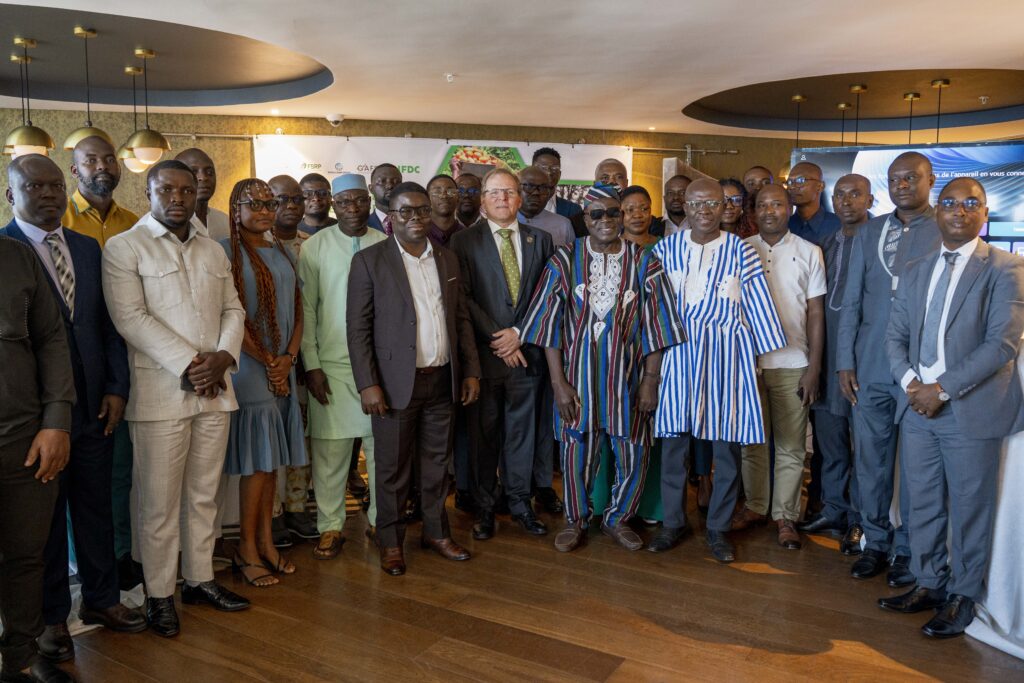
On September 15, the Togolese Government, IFDC, the West Africa Food System Resilience Program (FSRP) in Togo, and their partners gathered in Lomé to formalize a new milestone in the digital transformation of Togolese agriculture.
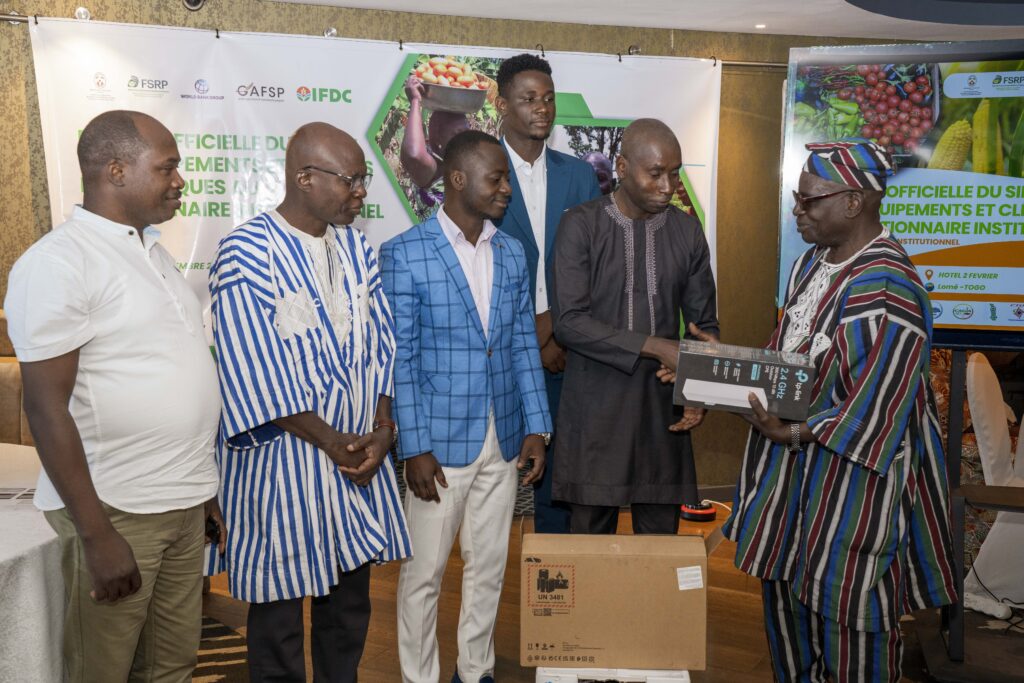
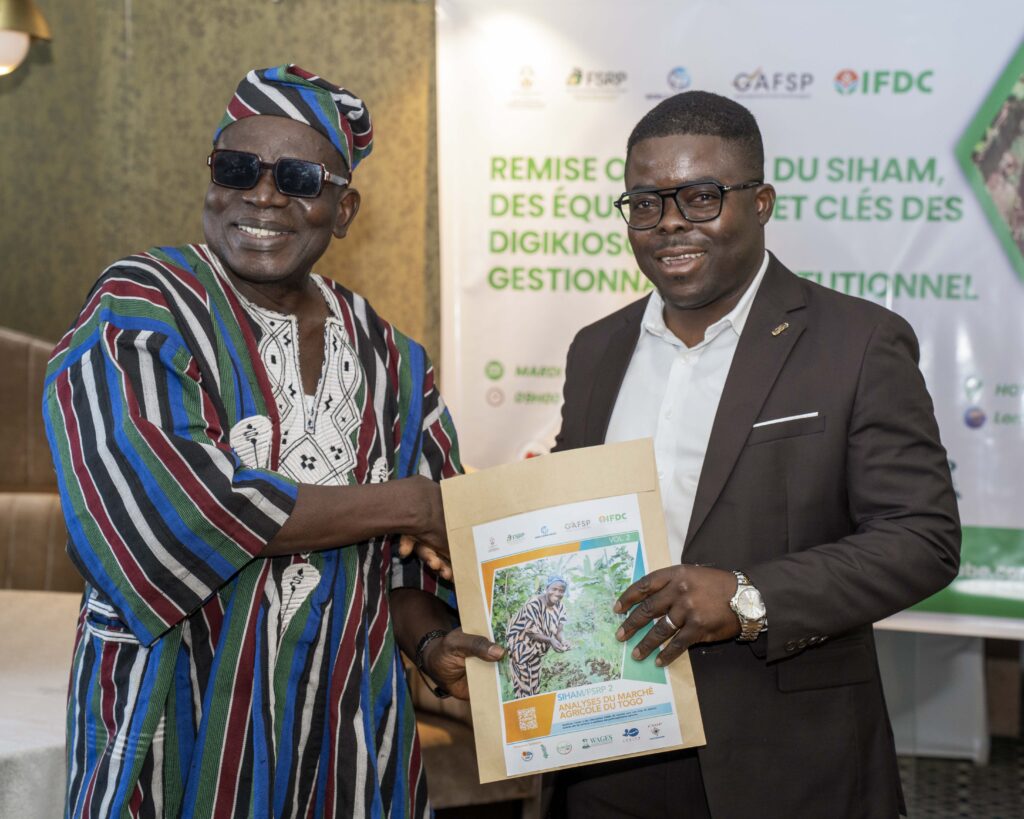
The partners officially handed the Hydro-Agro-Meteorological Information System (SIHAM) over to the Togolese Coordination of Farmers Organizations and Agricultural Producers (CTOP), the new institutional manager of the system. The ceremony also marked the handover of Digikiosks, including equipment and keys, to five regional managers.
Organized with support from IFDC, FSRP 2, and CTOP, the event brought together representatives from the Ministry of Agriculture, technical institutions, producer organizations, regional managers, and the media. It included a presentation of SIHAM, a video screening, and the symbolic handover of SIHAM and its equipment, as well as a discussion on the future management of the services. IFDC also distributed 100 copies of the second volume of AgriMarket Insights, a publication dedicated to agricultural market information.
“This handover is the culmination of a collective effort. Above all, it marks the beginning of a new phase: the large-scale operation of the system and the delivery of services to producers.”
Lamboni Damtare, FSRP-Togo Monitoring and Evaluation Specialist
A Digital Response to Climate and Information Risks
SIHAM is an initiative to digitize meteorological, climate, agricultural, and commercial data and is being implemented as part of the Hydro-Agro-Meteorological Information System (SIHAM)/West Africa Food System Resilience Program (FSRP) program, whose second phase (2024-2026) is funded by the World Bank, the Global Agriculture and Food Security Program (GAFSP), and the Togolese Government. IFDC has supported the Togolese National Meteorological Agency (ANAMET) and FSRP in the design and deployment of the system.
The platform aims to provide producers with reliable hydro-agro-meteorological information, market data, digital agricultural advice, and decision-support tools. These services are designed to help users better anticipate weather conditions, plan their activities, manage risks, and make more informed production and marketing decisions.
SIHAM’s services are accessible through various channels, including the web platform, mobile application, text messaging, and voice messaging. Information is disseminated in five local languages, making it more accessible to farming communities. The system also includes online extension services, market price data, geolocation of input distribution points, and information on climate risks and agricultural micro-insurance.
As of the end of March 2026, the platform had nearly 206,484 registered users, including farmers, technicians, and community facilitators. Between July 2025 and March 2026, 38,621 voice and text messages were sent to users.
A Transition Toward Strengthened National Ownership
The handover of the system to CTOP involved the transfer of physical equipment, but more importantly, it formalized the transition from development and deployment to institutional and operational management by national and regional actors.
The transfer took place in two stages. First, the Ministry of Agriculture officially handed over the system to CTOP, which will be responsible for institutional and national management.
Digikiosk equipment was then made available to regional managers responsible for providing local services to agricultural stakeholders. This structure had been defined during the preparatory meetings for the ceremony.
During the event, IFDC President and CEO Henk van Duijn described the ceremony as a turning point for the system’s future: “The official handover of the SIHAM system and the Digikiosks marks a crucial transition toward greater national ownership.”
Additionally, van Duijn congratulated all partners on successfully reaching this important project milestone while affirming IFDC’s approach based on innovation, local capacity building, and the sustainability of investments.
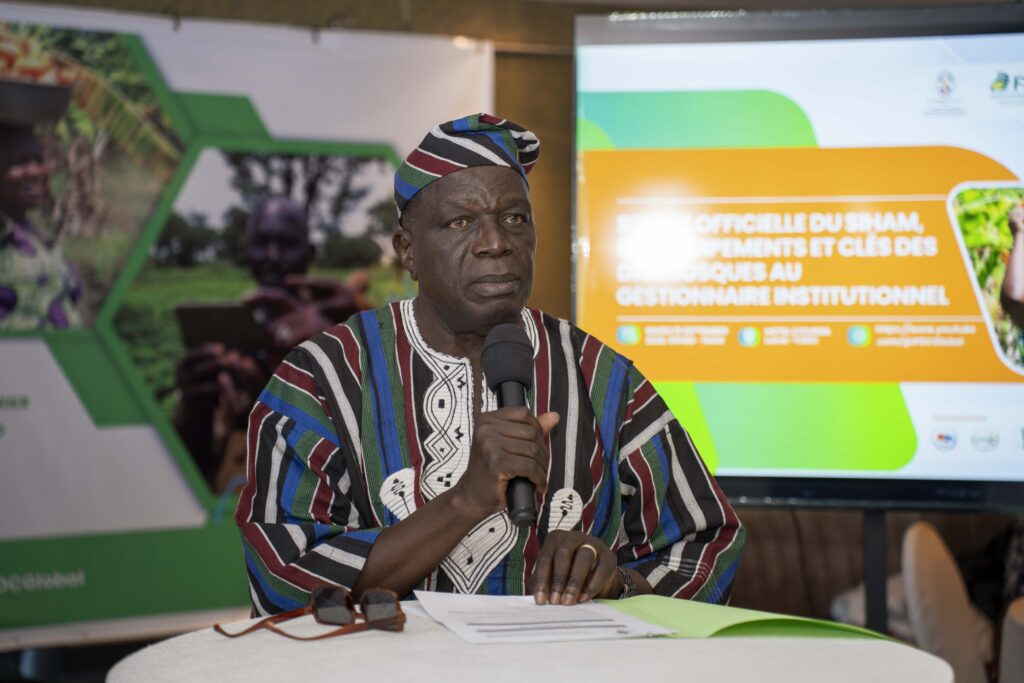
Representing Togo’s Minister of Agriculture Antoine Lékpa Gbégbéni, FSRP-Togo Monitoring and Evaluation Specialist Lamboni Damtare remarked, “This handover is the culmination of a collective effort. Above all, it marks the beginning of a new phase: the large-scale operation of the system and the delivery of services to producers.”
Damtare also called on managers to maintain the equipment and ensure a local service that is “accessible, reliable, and useful to agricultural stakeholders.”
CTOP and the regional managers will now assume a central role in operating the system. The next steps will focus on familiarizing staff with the equipment, implementing management agreements, regularly organizing activities at the Digikiosks, and coordinating with the institutions responsible for producing and updating information.
Digikiosks: Local Access Points
Digikiosks serve as SIHAM’s regional hubs. They are designed as local access points for information and the delivery of digital agricultural services. Some have been set up in existing offices that have been renovated and equipped with new technology, while a pilot Digikiosk has been installed as a dedicated structure.
In these spaces, producers and other stakeholders will be able to find local support and access agro-meteorological, commercial, and technical information. The Digikiosks are also intended to facilitate awareness-raising, user enrollment, hands-on training, and the collection of feedback from beneficiaries.
To strengthen the delivery of these services at the local level, 62 technical advisors in agricultural business management, including six women, have been trained across Togo’s six regions. Their training focused on digital agricultural services and the role of Digikiosks in disseminating the relevant information.
An Initiative Driven by a Multi-Stakeholder Partnership
SIHAM’s operations rely on the complementary roles of public institutions, farmer organizations, agricultural advisory bodies, private companies, and development partners.
ANAMET, for example, provides meteorological information, while the Institute of Advice and Technical Support (ICAT) and the Association of Agronomists for Development (AINAD) contribute to online technical advisory and extension services.
The Agricultural Input Supply and Management Cooperative (CAGIA) provides information on fertilizers, and the Directorate of Agricultural Production (DPA) supplies data on seeds, crop protection products, and input distribution channels. The Directorate of Planning, Statistics, and Monitoring and Evaluation (DPSSE) contributes information on food products and market prices.
Additionally, Lorica Assurances provides agricultural micro-insurance services, while CTOP handles awareness-raising, mobilization, and engagement with producers. TIC Agrobusiness supports the technical development, expansion, and consolidation of the platform.
Sustainability at the Heart of the Post-Project Phase
The key challenge following the official handover is ensuring the continuity of services. The sustainability of SIHAM will depend on the ability of CTOP, the regional managers, data-producing institutions, and technical partners to maintain regular coordination, update information, and adapt services to the needs expressed by users.
Monitoring the use of the Digikiosks and collecting feedback from beneficiaries will also be crucial to gradually improve the system. The post-project phase must therefore consolidate governance mechanisms, strengthen public-private partnerships, and support management models capable of ensuring the long-term viability of digital services.
The official handover event reflected a conviction shared among incoming and outgoing SIHAM partners: digital innovation becomes sustainable only when it is effectively adopted, maintained, and used by the people and organizations for whom it is intended. By placing the management of SIHAM in the hands of national institutions and stakeholders close to producers, IFDC and its partners have placed responsibility and trust in CTOP and the regional managers to maintain a localized response to Togo’s agricultural needs.
Designed as an innovative digital platform, the Hydro-Agro-Meteorological Information System (SIHAM)/West Africa Food Systems Resilience Program (FSRP) aims to facilitate farmers’ access to reliable climate information to support informed decision-making. SIHAM/FSRP is made possible through the support of the West Africa Food System Resilience Program (FSRP), financed by the World Bank, the Global Agriculture and Food Security Program (GAFSP), and the Government of Togo.