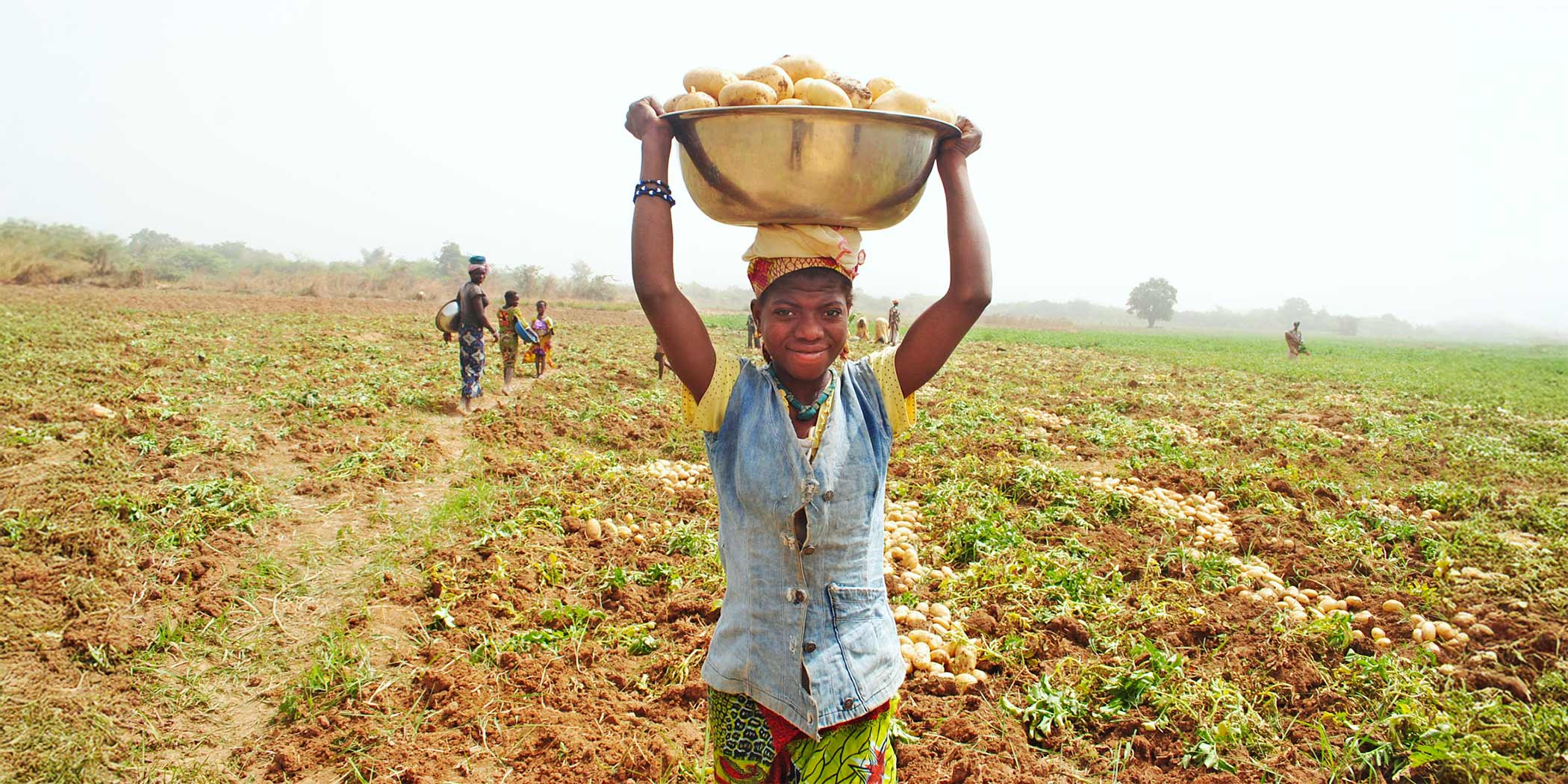
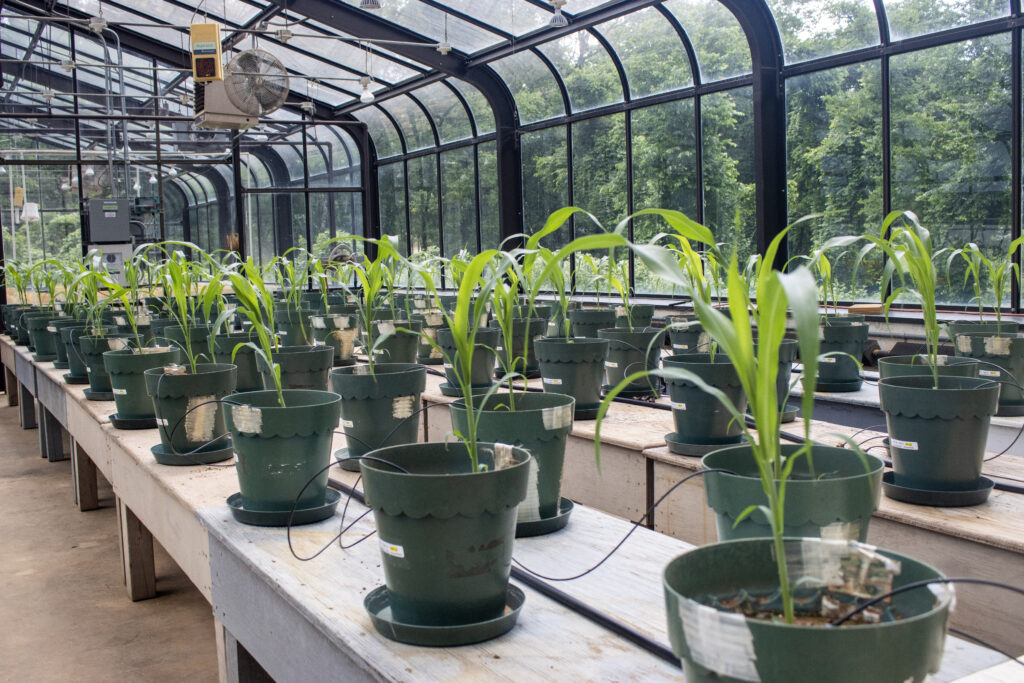

The International Fertilizer Development Center (IFDC) is excited to partner with Auburn University on the Feed the Future Fertilizer and Soil Health Innovation Lab (FSHIL), a five-year initiative funded by the U.S. Department of State and designed to address critical constraints to agricultural productivity, food security, and global supply chain resilience. Through the program, IFDC and Auburn University’s College of Agriculture will develop and scale more efficient, locally appropriate fertilizer and soil health solutions to benefit farmers around the world.
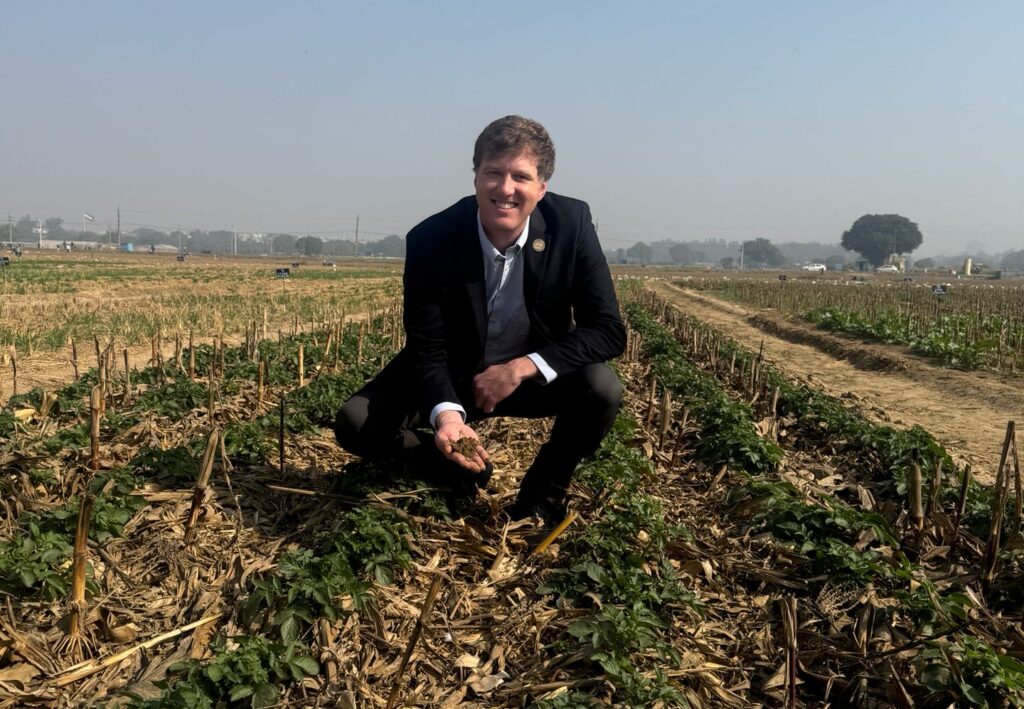
The grant-funded initiative is co-led by Rishi Prasad, Associate Professor and Extension Specialist in Nutrient Management at Auburn University, and Zachary Stewart, Vice President of Research and Development and Chief Scientist at IFDC.
Declining soil health, inefficient fertilizer use, and fragile input supply chains continue to limit agricultural productivity, particularly in low- and middle-income countries. FSHIL will bring together universities, research institutions, private sector partners, policymakers, and agricultural stakeholders to move promising innovations from research to widespread use, helping farmers increase productivity and profitability while strengthening the resilience of agricultural systems.
“To rebuild their soils, we have to provide the educational foundation and the technology they need to succeed.”
Rishi Prasad, Associate Professor and Extension Specialist in Nutrient Management at Auburn University
FSHIL is designed to create mutual benefits for American agriculture and farmers worldwide. For U.S. producers, advances in fertilizer efficiency, soil health, precision agriculture, and fertilizer production can help address rising input costs and supply-chain vulnerabilities, while the initiative will also open new pathways for U.S. fertilizer technologies, equipment, and digital agriculture solutions to reach growing international markets.
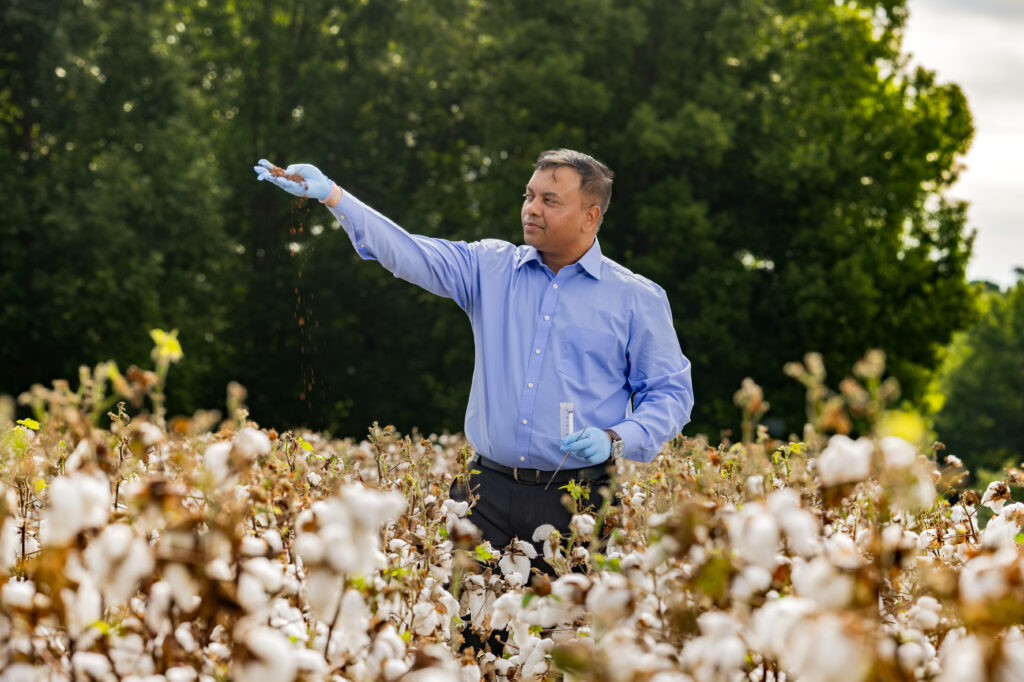
The FSHIL will take an integrated, systems-based approach organized around four core workstreams:
- Modernizing fertilizer production systems to improve efficiency and resilience;
- Developing next-generation fertilizer products and precision application technologies;
- Strengthening soil health systems to improve nutrient-use efficiency and farm productivity;
- Accelerating scaling through market development, private sector engagement, and policy alignment.
These efforts will be reinforced by two cross-cutting workstreams focused on AI-enabled decision support systems and human and institutional capacity development. Together, these components will help translate research findings into context-specific recommendations while building the expertise and institutions needed to sustain innovation beyond the life of the project.
As the project’s lead technical partner, IFDC will provide leadership in fertilizer systems, soil fertility management, technology validation, data integration, and policy and market engagement.
“One of the greatest challenges in agricultural innovation is turning promising scientific advances into solutions that reach farmers at scale,” said Zachary Stewart. “FSHIL brings together researchers, private-sector partners, policymakers, and farmers to accelerate that transition. By combining research, technology validation, digital decision-support tools, and market engagement, we can scale innovations that improve productivity and profitability, strengthen soil health, and build more resilient agricultural systems.”
From Research to Farmer Impact
A defining feature of FSHIL will be its emphasis on moving promising technologies from the lab to the field to the market. The project will combine targeted “quick-win” investments with competitive sub-awards to develop, adapt, validate, and scale technologies across diverse agricultural systems. IFDC will help integrate findings across these investments, drawing on existing global datasets and decision support tools to develop solutions tailored to specific soils, crops, markets, and farming conditions.
Initial activities will include innovations such as locally sourced phosphate fertilizers, organo-mineral fertilizers produced from agricultural waste, mechanized fertilizer deep placement, and site-specific fertilizer recommendations. Five initial quick-win activities are planned for Guatemala, Senegal, Zambia, Sri Lanka, and Bangladesh, while the broader project will also target research and scaling opportunities in Kenya and other countries through regional spillover and competitive investments.
“To rebuild their soils, we have to provide the educational foundation and the technology they need to succeed,” Prasad said. “To me, success in this project would be to increase their crop yields, train extension personnel, and reach roughly three million farmers globally. It sounds like a lofty goal, but we believe in it.” He also shared, “Organo-mineral fertilizer is capable of building the soil health for a more nutritious crop, We need to see how well they perform based on their climate and topography to help them grow better and be more productive with improved approaches.”
FSHIL will also establish a regional approach to scaling innovations. Hubs serving South Asia, sub-Saharan Africa, and Central America will connect universities, international research organizations, the private sector, and policy institutions to ensure that innovations move efficiently from lab to field to market at scale. These regional hubs will also be connected with IFDC’s Laboratory of Innovation for Fertilizers in the United States (LIFe-US) in Muscle Shoals, which will be the U.S.-based research and innovation engine, generating next-generation fertilizer and soil health innovations and mobilizing U.S. private sector partners to deliver results.
Building Solutions That Last
Beyond developing new technologies, FSHIL will invest in the people and institutions needed to sustain them. The program will train scientists, extension professionals, agribusiness practitioners, and farmers; strengthen national research and extension systems; and develop digital tools and educational resources that can continue supporting innovation after the project concludes.
The project is designed to generate measurable improvements in crop yields, nutrient-use efficiency, farmer profitability, soil health, and the commercialization of fertilizer technologies. Ultimately, the partnership aims to build more resilient fertilizer and soil health systems capable of delivering lasting benefits for farmers and strengthening food security across regions.
IFDC and the Auburn University College of Agriculture extend their sincere appreciation to Dr. Heersink, Senators Katie Britt and Tommy Tuberville, Congressmen Robert Aderholt and Barry Moore, the Alabama Farmers Federation (ALFA), and the U.S. Department of Agriculture (USDA) for their valued support and partnership. This successful outcome would not have been possible without the support and contributions of these individuals and institutions, each of whom played an instrumental role in advancing the Innovation Lab.